GEOTECHNICALENGINEERING
ST ALBERT ALBERTA
HomeSlopes & WallsActive/passive anchor design

Active and Passive Anchor Design in St Albert, Alberta

Site investigations you can build on.

LEARN MORE

St Albert sits on a complex sequence of glacial Lake Edmonton sediments, where stiff clay till meets pockets of soft lacustrine silt along the Sturgeon River valley. Anyone excavating below the water table in these deposits knows the lateral pressures don't give you much room for error. Our anchor design service addresses exactly that: we calculate unbonded and bonded lengths for both active and passive systems so your shoring wall stays within allowable deflection limits, even when the stratigraphy shifts from dense till to saturated clay over a few meters. While the geotechnical investigation provides the base parameters, we often recommend a CPT test to capture continuous sleeve friction data, which directly refines the grout-to-ground bond stress assumptions used in the anchor capacity equations.

A properly designed passive anchor in St Albert's clay till can develop bond stresses exceeding 150 kPa, but that number collapses if the grout bleeds into a silt lens.
Our service areas

Our approach and scope

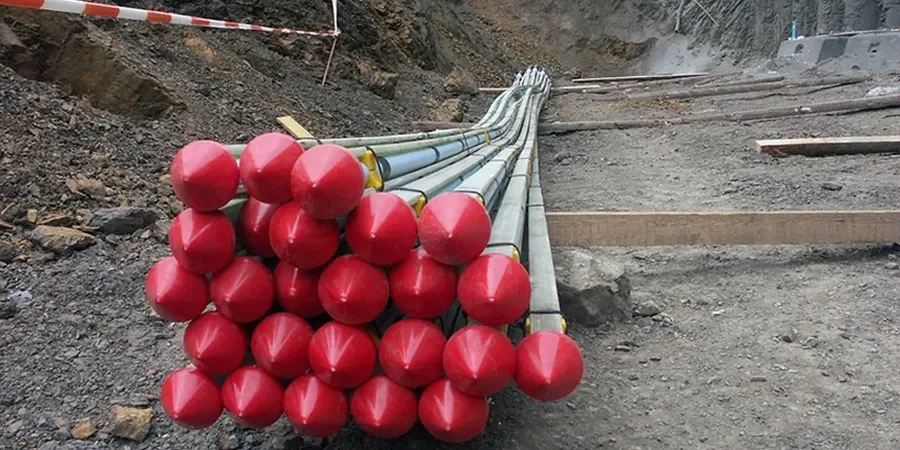
St Albert's growth from a small Métis settlement along the Sturgeon into a city of over 68,000 has pushed development onto marginal lands where stiff clay till gives way to softer glaciolacustrine deposits. This transition zone demands more than textbook anchor geometry. Our approach integrates the limit equilibrium analysis from the slope stability assessment into the anchor design when the excavation is near a natural incline or a creek bank. We specify the corrugated sheathing diameter, the number of DYWIDAG or threadbar strands, and the lock-off load based on the service limit state, ensuring the anchor head doesn't creep under sustained load. The design package includes the inclination tolerance, the minimum unbonded length per the critical failure surface, and the proof testing procedure, all calibrated to the undrained shear strength profile we interpret from site-specific lab work on Shelby tube samples.
Active and Passive Anchor Design in St Albert, Alberta
Technical reference — St Albert Alberta

Site-specific factors

Anchor performance varies dramatically between a site in Oakmont, where the till is dense and overconsolidated near the riverbank, and a site in Grandin, which sits on thicker sequences of glaciolacustrine clay. In Grandin, creep under sustained load becomes the controlling failure mode—the anchor head can lose tension if the bond zone relaxes in low-plasticity silt. We have seen lock-off loads drop 8 to 12 percent within the first 48 hours on projects that skipped the on-site suitability testing. That is why we specify a sacrificial anchor program: installing and testing one or two anchors to failure before production drilling begins. The data from the load-displacement curve lets us adjust the bond length per soil layer, avoiding the expensive fix of adding anchors after the excavation is already open and the wall is moving.

Need a geotechnical assessment?

Reply within 24h.

Email: info@geotechnicalengineering.vip

Reference standards

CSA A23.3 – Design of Concrete Structures (anchor reinforcement), NBCC 2015/2020 – Structural design provisions for earth retention, PTI DC35.1 – Recommendations for Prestressed Rock and Soil Anchors, ASTM A615 – Deformed and plain carbon-steel bars, CSA G40.21 – Structural quality steel

Typical values

ParameterTypical value
Anchor typeActive (prestressed) and passive (reaction)
Bar grades per CSA A23.31035 MPa (150 ksi) typical for threadbars
Minimum unbonded length3.0 m or beyond critical failure surface
Grout compressive strength35 MPa minimum at 28 days
Proof load test133% of design load per CSA and PTI recommendations
Typical bond zone in St Albert till6 to 9 m in stiff to hard clay till
Corrosion protection classClass II (double corrosion protection) in aggressive soils

Common questions

What is the difference between active and passive anchors in a shoring wall?

Active anchors are prestressed to a design lock-off load before excavation proceeds below the anchor level, actively compressing the soil behind the wall and minimizing lateral movement. Passive anchors, also called tiebacks, are not prestressed; they only develop resistance as the wall deflects and mobilizes the bond stress in the grout zone. In St Albert's stiff clay till, active anchors typically control movement better for deep cuts next to existing infrastructure.

How much does an anchor design package cost for a project in St Albert?

A complete anchor design package, including the capacity calculations, tendon specification, and load test protocol, typically ranges from CA$1,330 to CA$5,110 depending on the number of anchor levels, the complexity of the stratigraphy, and whether on-site sacrificial anchor testing is included in the scope.

What site investigation data do you need before starting the anchor design?

We need the undrained shear strength profile from the borehole logs, the groundwater level during the investigation, and the Atterberg limits of the cohesive layers. If the wall is within the Sturgeon River valley influence, we also review the CPT pore pressure dissipation data to evaluate the consolidation characteristics of any silt seams that could affect grout integrity during pressure injection.

Location and service area

We serve projects in St Albert Alberta and surrounding areas.

View larger map