GEOTECHNICALENGINEERING
ST ALBERT ALBERTA
HomeGeophysicsSeismic tomography (refraction/reflection)

Seismic Tomography (Refraction/Reflection) for Geotechnical Characterization in St. Albert

Site investigations you can build on.

LEARN MORE

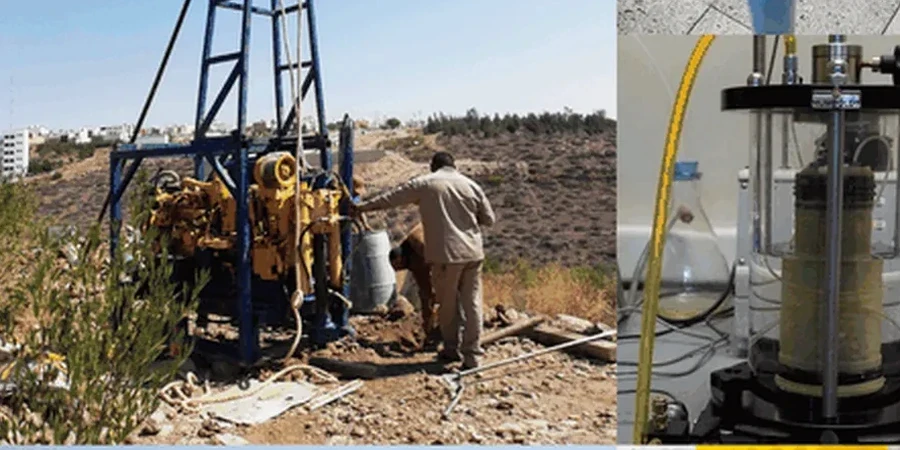
In St. Albert, many geotechnical investigations miss critical transitions between the surficial glaciolacustrine clays and the underlying Cretaceous bedrock. A dozen boreholes can provide discrete data points, but they rarely capture the lateral continuity of buried channels or the irregular bedrock surface shaped by preglacial erosion. Our team addresses this through seismic tomography, deploying both refraction and reflection arrays along proposed infrastructure corridors or beneath future building footprints. While a conventional SPT drilling program defines soil stiffness at specific stations, the tomographic profile interpolates those values continuously across the site, revealing velocity anomalies that could indicate loose infill, fractured shale, or sand lenses within the till. For projects near the Sturgeon River, we often combine this with MASW to extract shear-wave velocity profiles for seismic site class determination per NBCC 2020. The result is a ground model that integrates point data and spatial imaging, reducing the risk of encountering unexpected conditions during excavation or piling in the city's west-end developments.

Tomographic inversion converts travel-time picks into a spatially continuous velocity field, bridging the gap between scattered borehole logs and the true three-dimensional ground structure.
Our service areas

Our approach and scope

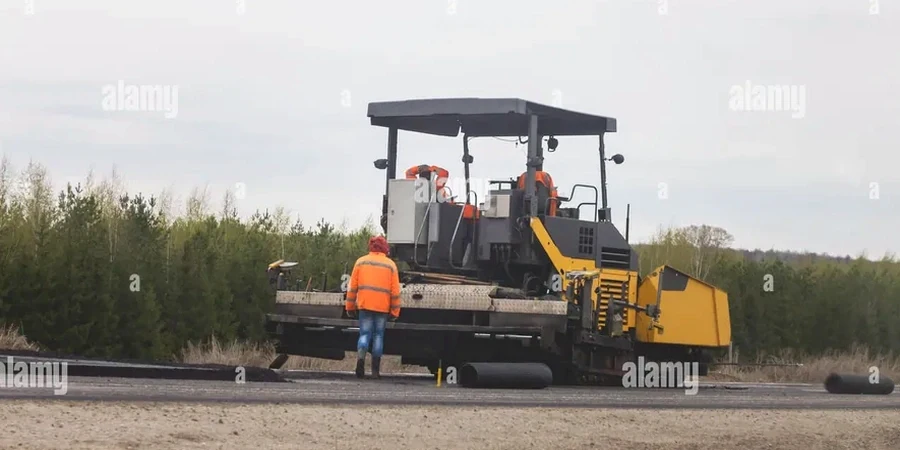
The geophysical response in St. Albert varies markedly between the flat upland plains east of Ray Gibbon Drive and the incised valley slopes descending toward Big Lake. On the tablelands, a thick sequence of till overlies the Horseshoe Canyon Formation, producing a strong velocity contrast that reflection profiling resolves with precision. Down in the valley, refraction surveys often encounter a hidden velocity inversion where soft, saturated lacustrine deposits underlie a desiccated crust, a classic pitfall that requires iterative ray-tracing and careful first-break picking. We acquire data with 48-channel seismographs and 4.5 Hz geophones, using sledgehammer and accelerated weight-drop sources to achieve penetration depths of 30 to 60 metres. The inversion workflow applies the generalized reciprocal method for refraction and pre-stack depth migration for reflection. Where site access permits, a test pit campaign validates the tomographic interpretation by exposing the actual stratigraphy at key tie points, ensuring the velocity model aligns with observable soil units and not mathematical artifacts. For linear projects like pipelines or road widenings, we also reference flexible pavement design parameters when the tomography identifies zones of potential thaw weakening in silty subgrades.
Seismic Tomography (Refraction/Reflection) for Geotechnical Characterization in St. Albert
Technical reference — St Albert Alberta

Site-specific factors

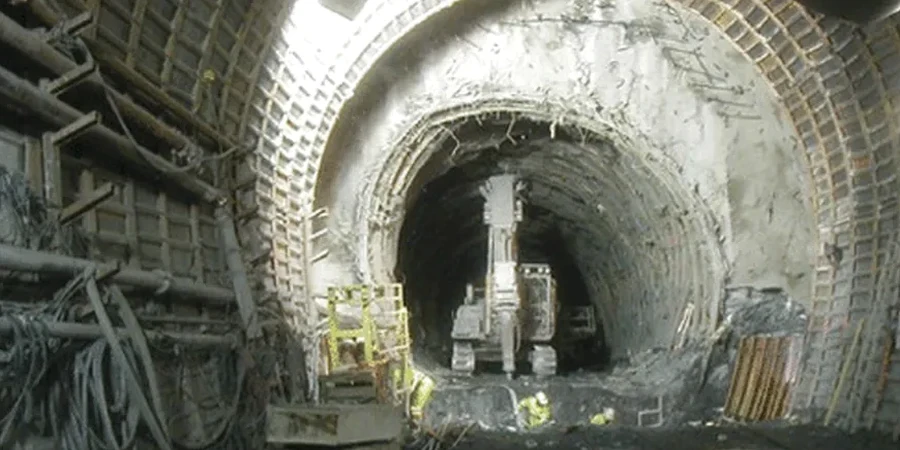
St. Albert's expansion from a Metis settlement into a suburban city has placed increasing infrastructure demands on the glacial and bedrock formations underlying the region. The most consequential geotechnical risk here is the presence of buried preglacial valleys carved into the bedrock surface, which can be filled with soft, compressible sediments or even artesian aquifers. A borehole-based investigation spaced on a 50-metre grid can completely miss a 15-metre-wide channel that would undermine a shallow foundation or cause a tunnel face collapse. Seismic reflection tomography images these bedrock depressions directly, mapping the velocity contrast between infill and intact shale. This diagnostic capability matters because undetected channels beneath a deep excavation or a retaining wall can lead to differential settlement, basal heave, or sudden water inflow. Our processing sequence includes careful static corrections for the near-surface low-velocity layer, a step that inexperienced crews often skip, producing a falsely smooth bedrock horizon and a false sense of security for the design engineer.

Need a geotechnical assessment?

Reply within 24h.

Email: info@geotechnicalengineering.vip

Reference standards

NBCC 2020 (National Building Code of Canada, seismic provisions), ASTM D5777-18 (Standard Guide for Using the Seismic Refraction Method), CSA A23.3-19 (Design of Concrete Structures, seismic reference), ASTM D7128-18 (Standard Guide for Using the Seismic Reflection Method)

Typical values

ParameterTypical value
Typical P-wave velocity range (glacial till)1,200 – 2,100 m/s
Typical P-wave velocity (Cretaceous shale, intact)2,400 – 3,400 m/s
Maximum imaging depth (refraction, weight-drop)45 – 65 m below surface
Geophone array48-channel, 2–5 m spacing
Acquisition softwareGeometrics Geode / Seistronix RAS-24
Inversion method (refraction)Generalized Reciprocal Method + tomography
Reporting standardASTM D5777 / NBCC 2020 seismic site class

Common questions

How does seismic tomography complement traditional borehole investigations in St. Albert's glacial terrain?

Boreholes provide direct measurements of soil type, density, and strength at discrete points. Seismic tomography fills the gaps between boreholes, imaging the lateral continuity of layers and detecting abrupt changes like buried channels or bedrock steps. When we calibrate the velocity model against borehole logs, the combined dataset yields a far more reliable ground model than either method alone, particularly in the heterogeneous till and glaciolacustrine deposits common across St. Albert.

What depth of investigation can seismic refraction achieve in the Sturgeon River valley?

With a 115-metre spread length and an accelerated weight-drop source, refraction tomography typically images to depths of 30 to 45 metres in the valley. Reflection profiling can reach 80 to 200 metres, depending on the source energy and the acoustic impedance contrast between the Quaternary sediments and the underlying Horseshoe Canyon Formation. Heavily saturated, high-attenuation clays reduce effective penetration, so we model the expected depth before mobilizing.

What is the typical cost range for a seismic tomography survey in St. Albert?

Survey costs in the St. Albert area generally fall between CA$3,610 and CA$7,730 per line, depending on the total lineal metres, source type, and processing complexity. Short refraction lines for a single building footprint are at the lower end, while multi-line reflection surveys with pre-stack depth migration fall at the upper end. Each proposal includes a detailed scope defining the number of shot points, geophone spacing, and deliverables so the price reflects the actual effort.

Can seismic tomography determine rippability for excavation planning in St. Albert?

Yes. Refraction tomography measures P-wave velocities in the subsurface, and these velocities correlate with rock rippability classifications published by Caterpillar and other manufacturers. In St. Albert's Cretaceous shale formations, velocities above approximately 2,200 m/s typically indicate that ripping will be marginal or require heavy equipment. The tomogram provides a continuous rippability profile along the excavation alignment, allowing contractors to plan equipment needs and estimate production rates before breaking ground.

Location and service area

We serve projects in St Albert Alberta and surrounding areas.

View larger map