GEOTECHNICALENGINEERING
ST ALBERT ALBERTA
HomeRoadwayRigid pavement design

Rigid Pavement Design Services in St. Albert, Alberta

Site investigations you can build on.

LEARN MORE

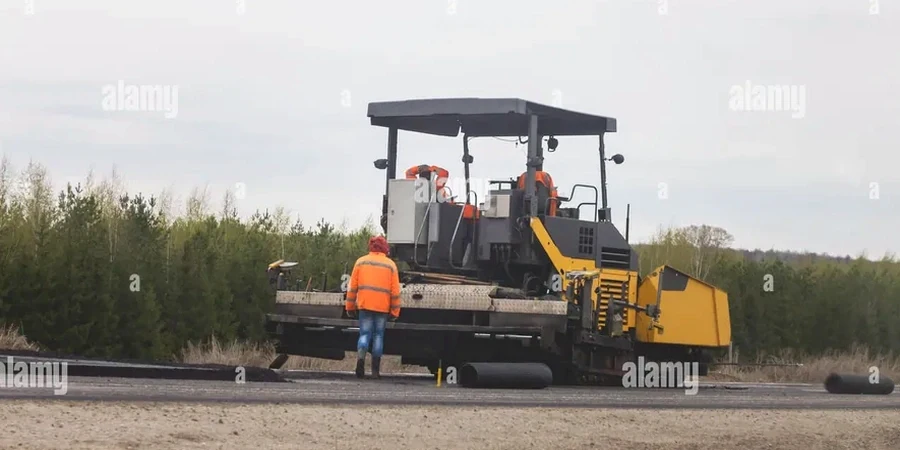
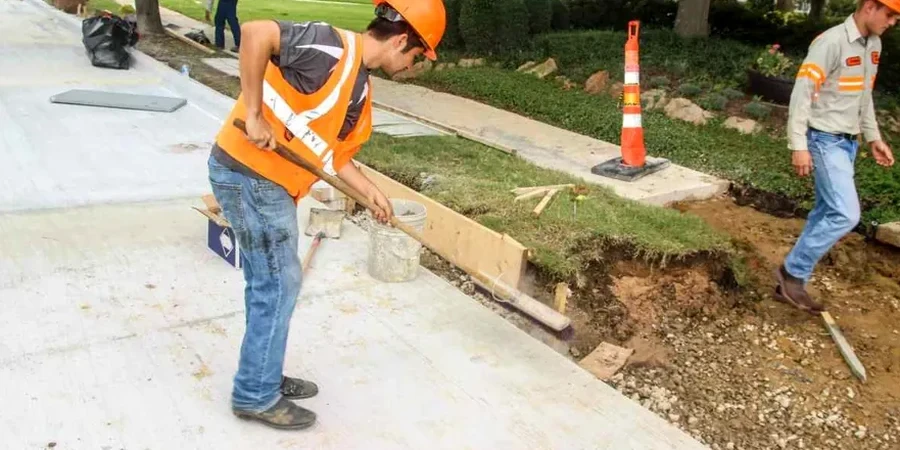
St. Albert's position at 53.6°N latitude means pavement structures face freeze-thaw cycles exceeding 80 per winter season, a condition that demands precise rigid pavement design. The city sits on glaciolacustrine deposits of the former Lake Edmonton, with silty clay subgrades that can lose up to 60% of their bearing capacity during spring thaw. Our laboratory team addresses these challenges through concrete slab analysis that integrates subgrade modulus values derived from in-situ testing. Before finalizing thickness calculations, many projects benefit from CBR testing for road subgrades to establish the resilient modulus of the native soil, which directly feeds into the Westergaard-based design equations we apply for jointed plain concrete pavements across the Capital Region.

A rigid pavement in St. Albert lives or dies by its joint spacing and the uniformity of its subgrade support — two factors we control with field measurement, not assumptions.

Our service areas

Our approach and scope

The design workflow begins with a falling weight deflectometer and dynamic cone penetrometer survey to map stiffness variability along the proposed alignment. Back-calculation from deflection basins yields the effective k-value of the subgrade-subbase system, a parameter St. Albert's silty soils often place between 35 and 70 MPa/m. We then input traffic spectra — including the heavy truck routes along St. Albert Trail and Ray Gibbon Drive — into the cumulative damage analysis. Edge stresses under thermal curling and axle loading are checked against the concrete flexural strength target of 4.5 MPa at 28 days. The plate load test provides a direct static k-value measurement on compacted granular subbase, a verification step we include when designing industrial yard slabs and arterial intersections subject to frequent bus and emergency vehicle loading.
Rigid Pavement Design Services in St. Albert, Alberta
Technical reference — St Albert Alberta

Site-specific factors

A warehouse expansion on the city's northwest industrial park encountered severe slab faulting within three years of occupancy. The original design assumed uniform subgrade support, but the site straddled a transition zone between stiff glacial till and softer lacustrine clay. Differential heave during freeze-thaw cycles created voids under the slab corners, concentrating load stresses beyond the concrete's fatigue limit. Our forensic investigation involved coring to measure joint deterioration and GPR scanning to map void extent beneath the slabs. The retrofit required undersealing with low-mobility grout and installing additional load transfer dowels at contraction joints. This case underscores why rigid pavement design in St. Albert must account for longitudinal subgrade variability — a single k-value across an entire site is insufficient when the soil profile changes within 30 metres.

Need a geotechnical assessment?

Reply within 24h.

Email: info@geotechnicalengineering.vip

Reference standards

CSA A23.3 — Design of Concrete Structures, CSA A23.1 — Concrete Materials and Methods of Concrete Construction, ASTM D4694 — Standard Test Method for Deflections with a Falling-Weight-Type Impulse Load Device, ASTM D1196 — Standard Test Method for Nonrepetitive Static Plate Load Tests of Soils and Flexible Pavement Components, NBCC (National Building Code of Canada) — Structural Commentaries

Typical values

ParameterTypical value
Design subgrade k-value (silty clay, St. Albert)35 – 70 MPa/m
Concrete flexural strength (28-day target)4.5 MPa (CSA A23.3)
Slab thickness range (arterial roads)200 – 280 mm
Joint spacing (plain jointed concrete)3.5 – 4.5 m
Freeze-thaw durability exposure classC-2, with air content 5-8%
Base/subbase layer (granular, compacted)150 – 250 mm (Granular A)
Tie bar diameter and spacing16M @ 750 mm c/c (longitudinal joints)

Common questions

What is the cost range for a rigid pavement design package in St. Albert?

For a typical commercial or industrial project in St. Albert, the complete rigid pavement design — including subgrade investigation, thickness analysis, and joint detailing — ranges from CA$2,310 to CA$7,390 depending on the pavement area, traffic classification, and number of field test locations required.

How do freeze-thaw cycles affect rigid pavement performance in St. Albert?

Repeated freeze-thaw cycling causes subgrade heave and softening during spring melt, which reduces the k-value by up to 40-50%. We specify air-entrained concrete with 5-8% air content and design the slab thickness to maintain edge stress ratios below 0.50 under the worst-case spring subgrade condition, not just the summer value.

What joint spacing is appropriate for St. Albert's climate?

For plain jointed concrete pavement, we typically recommend joint spacing between 3.5 and 4.5 metres. The ratio of slab length to radius of relative stiffness is kept below 8.0 to minimize curling stresses during the extreme temperature differentials common in central Alberta winters.

Do you test the subgrade modulus directly or estimate it from other tests?

We use both direct and indirect methods. Static plate load testing provides the measured k-value at selected locations, while dynamic cone penetrometer and FWD deflection data allow us to map k-value variability continuously along the alignment. The correlation is calibrated with site-specific plate load results to avoid generic assumptions.

Location and service area

We serve projects in St Albert Alberta and surrounding areas.

View larger map