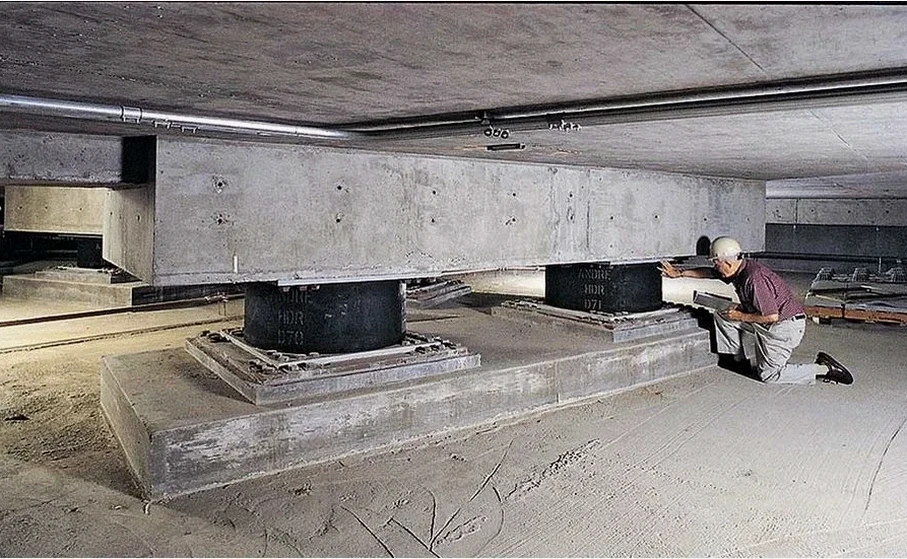
The difference between a building on the Sturgeon River valley's thick lacustrine clays and one on the dense till uplands near the Enjoy Centre is night and day from a seismic standpoint. In St Albert, the soft, normally consolidated clays can amplify ground motions significantly—even from the moderate events typical of the Western Canada Sedimentary Basin. Most engineers default to a standard ductile design, but when you're looking at a post-disaster facility or an essential service building, that approach hits its limit. Our team has found that integrating a seismic microzonation study early on gives us the site-specific spectra we need to justify a base isolation solution to the authority having jurisdiction, rather than relying on the generic NBCC hazard values. This is about matching the isolation system—elastomeric bearings, friction pendulum, whatever fits—to the real dynamic character of the St Albert subsurface, not just a textbook assumption.
In St Albert's soft clay zones, a well-tuned base isolation system typically cuts the design base shear by over 70% compared to a fixed-base solution.