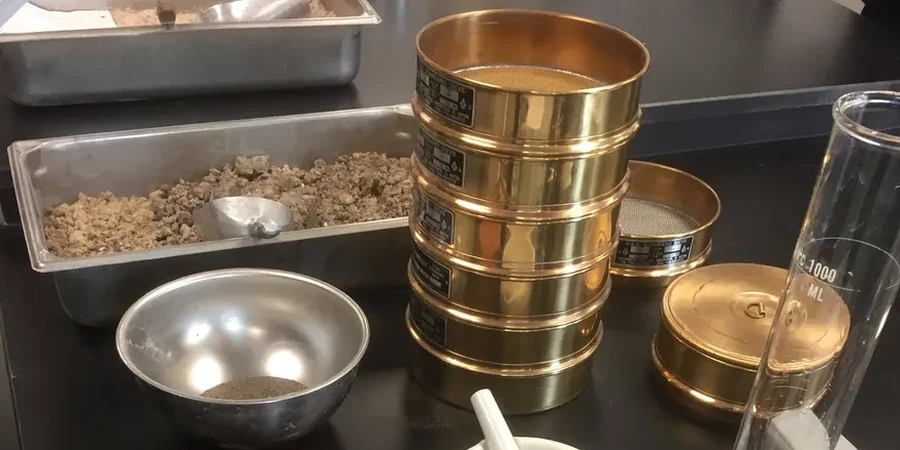
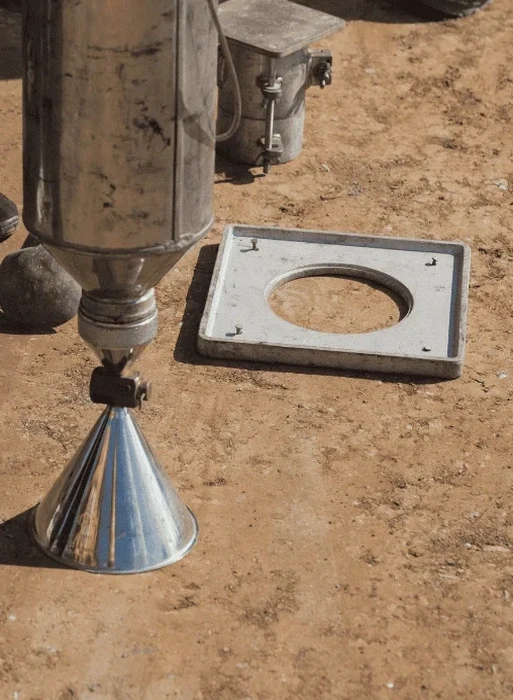
A recent trench backfill inspection in the Erin Ridge North subdivision highlighted a recurring issue with the glacial till that underlies much of St. Albert. The contractor had achieved visual compaction, but the first two lifts failed to meet the 98% Standard Proctor density specified in the geotechnical report. This is common in the region, where the silty clay matrix of the till can hold moisture unpredictably, especially after the spring thaw along the Sturgeon River valley. Our field crew arrived within the hour, set up the sand cone apparatus on the compacted lift, and ran the test according to ASTM D1556 while the site supervisor watched. We pulled a representative sample from the excavated material for immediate moisture determination, because the difference between passing and failing in St. Albert's lacustrine sediments often comes down to a half-percent deviation from optimum moisture content. The field density test provides the in-place verification that laboratory Proctor curves cannot commit to on their own, particularly when the native till transitions laterally from clay-rich to sandier lenses across a single building pad. We frequently pair the sand cone method with plate load testing on commercial sites where the structural engineer needs both density and bearing capacity confirmation before footing placement, and we rely on grain size analysis to identify those problematic silt pockets that skew compaction results during subgrade preparation.
A half-percent moisture variance in St. Albert's glacial till can drop compaction from 98% to 93%—the sand cone catches it before the next lift goes down.