GEOTECHNICALENGINEERING
ST ALBERT ALBERTA
HomeUnderground ExcavationsGeotechnical analysis for soft soil tunnels

Geotechnical Analysis for Soft Soil Tunnels in St. Albert, Alberta

Site investigations you can build on.

LEARN MORE

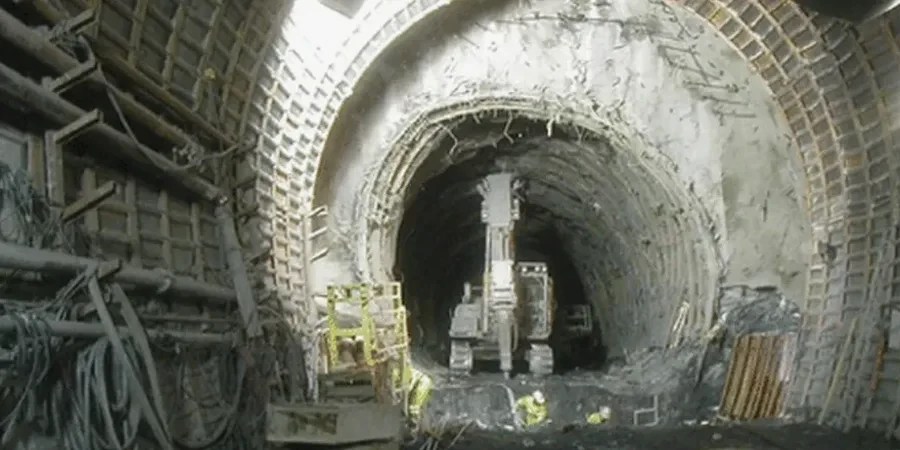
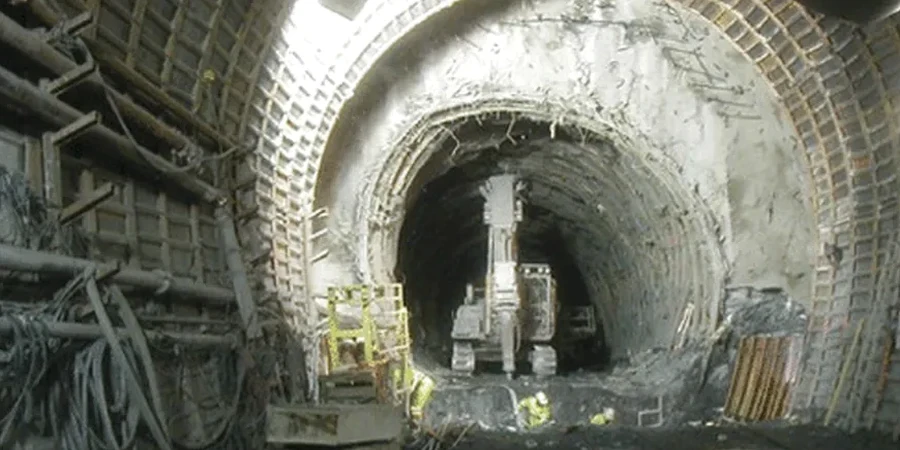
The EPB-TBM cutterhead can stall in seconds if the face pressure doesn't match the undrained shear strength of the native till. In St. Albert, where the glacial Lake Edmonton clay transitions into preglacial sands along the Sturgeon River valley, we deploy a combination of field vane tests and advanced triaxial testing to define the exact operational window for tunnel boring machines. This isn't a generic look at soil behavior; it's a project-specific analysis that dictates the slurry mix, the screw conveyor torque, and the real-time settlement control parameters. Before a single ring is erected, our team links the CPT test data from the alignment to the lab-derived critical state parameters, ensuring the TBM never operates blind in the city's notoriously sensitive silts.

In St. Albert's glaciolacustrine basin, a 2% error in pore pressure prediction can translate into a 200 mm settlement trough at the surface.
Our service areas

Our approach and scope

In St. Albert, many times we see that contractors underestimate the transition zones where the stiff clay till gives way to saturated sand lenses; these contacts are where face losses spike. The key is not just classifying the material but understanding its contractive behavior under unloading.
  • Critical State Soil Mechanics application: We define the state parameter (ψ) for each stratigraphic unit to predict whether the soil will strain-soften at the face.
  • Anisotropic consolidation analysis: The K0 value in St. Albert's overconsolidated clays can exceed 1.5, which alters the arching ratio over the crown.
  • Creep susceptibility screening: We quantify the coefficient of secondary compression (Cα) for the Upper Cretaceous strata to project long-term settlement of the lining.
For deep mixed-face conditions, the slope stability analysis at the portal entries becomes just as critical as the running ground assessment, especially where the Red Willow Park pathways cut close to the launch pit.
Geotechnical Analysis for Soft Soil Tunnels in St. Albert, Alberta
Technical reference — St Albert Alberta

Site-specific factors

St. Albert's expansion from a rural settlement into a suburban hub with deep utility corridors has placed new tunnels directly beneath the historic Mission district. The biggest subsurface risk isn't just the low strength of the soil, but the presence of discontinuous methane pockets in the Cretaceous bedrock faults—a hazard often missed by standard desk studies. A poorly calibrated face pressure leads to rapid blowout in the sand seams, while an over-conservative pressure fractures the clay and creates a hydraulic connection to the overlying aquifers. We mitigate this by integrating in-situ permeability tests with precise pore-pressure dissipation data, ensuring the annulus grouting pressure never exceeds the minor principal stress at the crown. This protects the structural integrity of nearby shallow foundations, including the sensitive infrastructure along Sir Winston Churchill Avenue.

Need a geotechnical assessment?

Reply within 24h.

Email: info@geotechnicalengineering.vip

Reference standards

NBCC 2020 (National Building Code of Canada), CSA A23.3-19 (Design of Concrete Structures), ASTM D4767-20 (Consolidated Undrained Triaxial Compression Test), ASTM D2850-23 (Unconsolidated Undrained Triaxial Compression Test), ASTM D5084-16a (Hydraulic Conductivity)

Typical values

ParameterTypical value
Undrained shear strength (Su) range25–150 kPa (varies with preconsolidation)
At-rest earth pressure coefficient (K0)1.2–1.8 for overconsolidated till
Standard penetration resistance (N60)4–30 blows/300 mm
Permeability (k) of sand lenses1x10⁻⁶ to 1x10⁻⁴ m/s
Plasticity Index (PI) of clay layers20–45%
Critical state friction angle (φ'cs)19°–24° for soft clays
Liquidity Index (LI) range0.8–1.3 (sensitive zones)

Common questions

How does the local geology in St. Albert affect tunnel boring machine selection?

The Sturgeon River valley exposes a sequence of soft, saturated glaciolacustrine clays and interbedded sand lenses. An Earth Pressure Balance (EPB) TBM is almost always required in St. Albert. Our analysis defines the conditioning agents needed to transform the excavated spoil into a paste that transmits face pressure uniformly, preventing the 'quick sand' condition common in the city's lower till units.

What is the typical cost range for a comprehensive tunnel feasibility study?

For a project in St. Albert, the geotechnical analysis for soft soil tunnel feasibility typically ranges from CA$5,550 to CA$21,410. The final scope depends on the linear footage of the alignment, the number of boreholes required to cross the sensitive transition zones, and the complexity of the advanced triaxial and consolidation testing program.

How do you determine the grouting pressure for the annular gap?

The grouting pressure must be precisely controlled to avoid hydraulic fracturing. We calculate the minor principal effective stress at the crown, adding a safety margin that doesn't exceed the tensile strength of the St. Albert clay. Our methodology involves back-pressure saturated triaxial tests to measure the Skempton's B parameter, ensuring the two-component grout fills the tail void without liquefying the surrounding sensitive silt.

Can you manage the risk of methane gas encountered during tunneling?

Yes, the Cretaceous bedrock and organic-rich paleosols in the St. Albert area can trap biogenic methane. Our analysis includes gas content desorption testing on sealed core samples. We map the gas concentration along the alignment to provide the contractor with the explosive risk classification, ensuring the TBM's ventilation and monitoring systems comply with occupational safety regulations for gassy ground.

What instrumentation do you recommend for monitoring settlement during a drive under existing neighborhoods?

We design a real-time monitoring plan that includes deep rod extensometers to track subsurface settlement at the crown and multiple-point liquid level arrays at the surface. For drives under older St. Albert residential areas with shallow footings, we pair these with automated total stations that alarm if the angular distortion approaches 1/500, triggering immediate review of the TBM's face pressure and backfill injection rates.

Location and service area

We serve projects in St Albert Alberta and surrounding areas.

View larger map