GEOTECHNICALENGINEERING
ST ALBERT ALBERTA
HomeInvestigationExploratory test pit

Exploratory Test Pits in St Albert: Why Guessing Subsurface Conditions Costs More Than Digging

Site investigations you can build on.

LEARN MORE

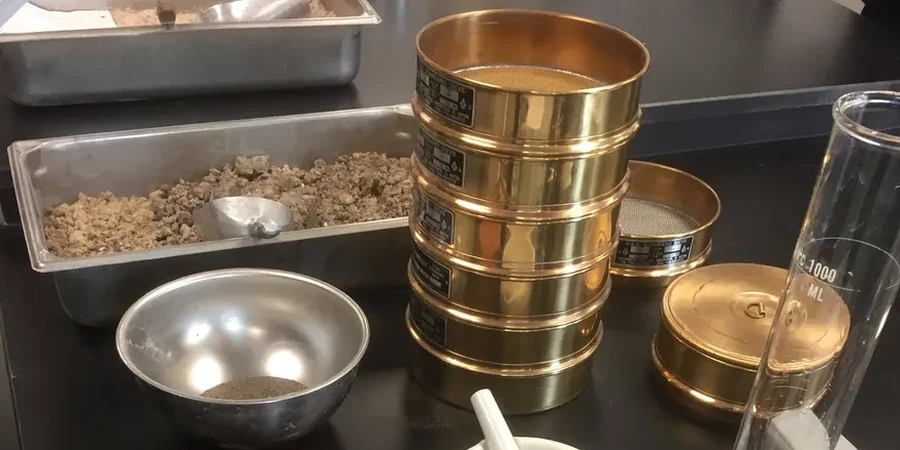
We see it all the time in St Albert—a contractor skips the exploratory test pit to save a few hundred dollars, then hits an old buried slough or an undocumented fill zone two days into excavation. The backcharge for dewatering, stone columns, and schedule delay runs into the tens of thousands. The Sturgeon River valley carved through this landscape ten thousand years ago, leaving a patchwork of glaciolacustrine clays, alluvial sands, and organic silts that no desktop study can resolve. A single test pit opened to three metres depth with our excavator gives you a direct look at stratigraphy, water ingress, and bearing material—information no borehole log can replicate. For St Albert projects from Braeside infills to Riverside commercial pads, we combine the test pit with grain-size analysis to confirm drainage potential, and when load demands increase we add a plate load test right on the pit floor for in-situ bearing verification.

A one-metre-wide exploratory test pit tells you more about your actual bearing stratum than three boreholes extrapolated from twenty metres away.
Our service areas

Our approach and scope

St Albert sits at roughly 665 metres elevation on the western edge of the Edmonton Plain, where the Quaternary overburden can swing from stiff till to compressible lacustrine clay within fifty horizontal metres. That is exactly why exploratory test pits matter here: you do not sample a single point and assume the rest of the lot behaves the same way. Our crews log each pit wall with Munsell colour notation, pocket penetrometer readings, and moisture condition; we photograph every lift and measure groundwater seepage rate if the water table is intercepted. For deeper investigations we often sequence the test pit program ahead of SPT drilling, correlating the visual stratigraphy with measured N-values so the geotechnical model has both observational and numerical backbone. All fieldwork follows CSA A23.3 and the NBCC, but more importantly it follows the reality that St Albert’s subsoils change fast and penalize assumptions hard.
Exploratory Test Pits in St Albert: Why Guessing Subsurface Conditions Costs More Than Digging
Technical reference — St Albert Alberta

Site-specific factors

The buried preglacial valleys that thread beneath parts of St Albert create a risk profile that boreholes alone can miss. When a test pit exposes a thin sand lens overlying a soft silty clay at two metres depth, you are looking at a potential differential settlement problem that a widely spaced borehole program might never intercept. The local water table, typically within two to four metres of grade in spring, also reveals itself immediately in an open pit: if the excavation walls start sloughing within minutes of reaching depth, you have a constructability issue that needs to be priced into the foundation bid. We document these conditions with high-resolution photography and field vane shear tests inside the pit, then translate the observations into practical recommendations—whether that means over-excavation and recompaction, a stone column ground improvement program, or switching from a spread footing to a stiffened slab-on-grade. In St Albert’s regulatory environment, where the City reviews geotechnical submissions against the Alberta Building Code, a well-documented test pit log can be the difference between permit approval in one week or one month.

Need a geotechnical assessment?

Reply within 24h.

Email: info@geotechnicalengineering.vip

Video overview

Reference standards

CSA A23.3 – Design of Concrete Structures (foundation subgrade preparation), NBCC 2020 – National Building Code of Canada (geotechnical site investigation requirements), ASTM D2488 – Standard Practice for Description and Identification of Soils (Visual-Manual Procedure), ASTM D2573 – Standard Test Method for Field Vane Shear Test in Cohesive Soil

Typical values

ParameterTypical value
Maximum depth (standard excavator)3.5 m
Typical trench width0.6–1.2 m
Groundwater observation window24–48 h post-excavation
Sampling methodBlock samples / bag samples per stratigraphic unit
In-situ testing availableHand penetrometer, vane shear, DCP on pit floor
Backfill protocolCompacted lift placement with density control
Reporting standardCSA A23.3 & NBCC geotechnical log format

Common questions

How much does an exploratory test pit cost in St Albert?

Budget between CA$680 and CA$1,020 per pit for standard residential depths under three metres, assuming clear utility locates and reasonable machine access. The range depends on the number of pits in a single mobilization, whether groundwater monitoring is required overnight, and any extra lab testing like grain-size or Atterberg limits. A typical three-pit program for a single-family lot lands around CA$2,500–CA$3,000 all-in. Complex commercial pits with deep trench boxes or extended observation periods will price higher; we provide fixed-quote pricing after reviewing the site plan and Alberta One-Call clearance status.

How deep can you go with an exploratory test pit?

With a standard rubber-tired excavator on flat ground, we routinely reach 3.0 to 3.5 metres below grade in St Albert’s till and clay soils. Beyond that depth, trench stability becomes the limiting factor and we either step the pit, use a trench box for worker safety per Alberta OHS requirements, or transition to SPT drilling for deeper investigation. If groundwater is encountered above 2.5 metres, we may stop the pit at that horizon and install a standpipe to measure the stabilized water level over 24 to 48 hours.

What’s the difference between a test pit and a borehole?

A test pit gives you a continuous exposed face of soil you can see, photograph, and sample directly in block form; a borehole gives you a vertical log interpreted from auger cuttings or split-spoon samples at discrete intervals. In St Albert’s variable glaciolacustrine deposits, the pit reveals thin silt seams, sand stringers, and organic lenses that a split-spoon might smear or miss entirely. Boreholes go deeper and provide SPT N-values for quantitative design; test pits deliver qualitative certainty about the upper three metres where most shallow foundations sit. We often use both together: pits for the near-surface picture, boreholes for the deep stratigraphy.

How long does the City of St Albert take to review a geotechnical report with test pit data?

Most residential submissions cycle through City review in five to ten business days if the report follows the standard geotechnical log format and clearly states bearing capacity and soil classification per the Alberta Building Code. Commercial projects requiring Development Engineering review may take two to four weeks depending on seasonal workload. We format our test pit logs to match the City’s submission expectations—photo plates, stratigraphic columns, water level data, and a clear recommendation section—so the reviewer does not need to request clarifications that delay permit issuance.

Location and service area

We serve projects in St Albert Alberta and surrounding areas.

View larger map